Modica — The Baroque City of Sicily
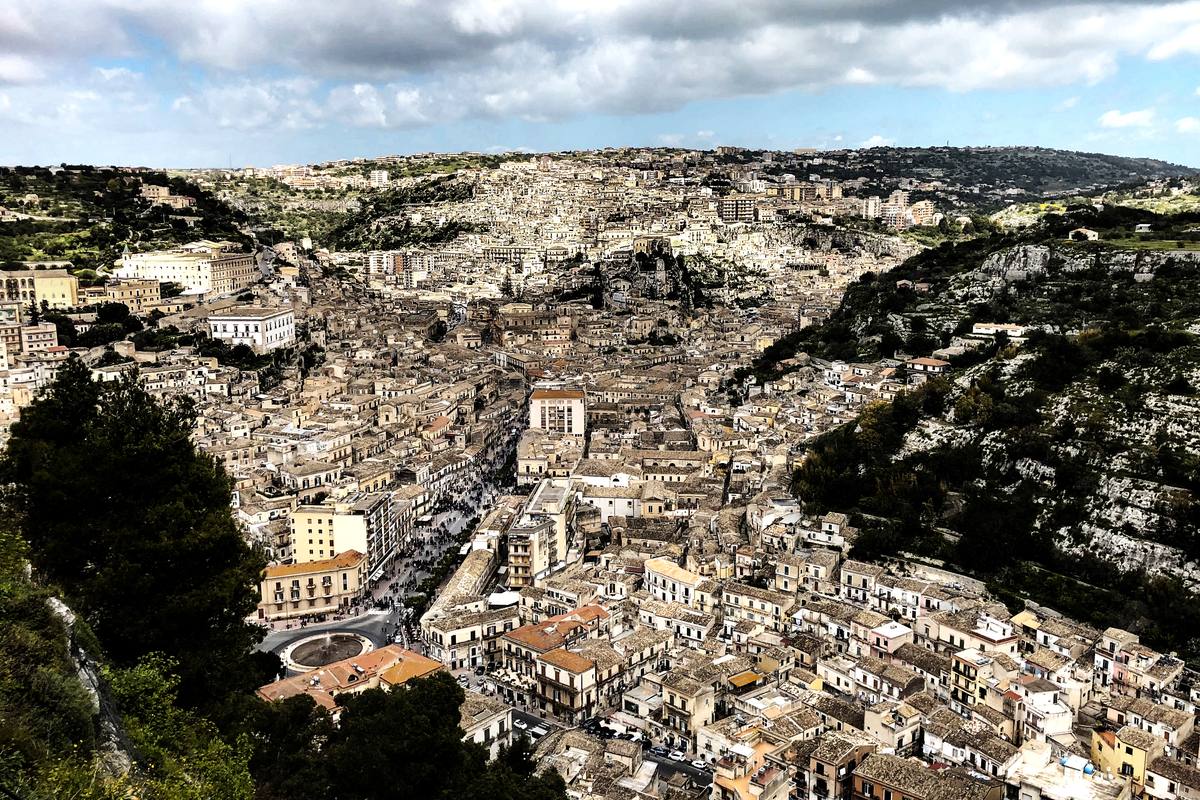
Modica is one of the most extraordinary cities in the Mediterranean: baroque by vocation, Arab in its roots, Spanish in its history, Sicilian in its soul. A UNESCO World Heritage site since 2002, a world capital of PGI chocolate, nestled between two limestone valleys in southeastern Sicily. With a history spanning Greeks, Romans, Arabs, Normans, Aragonese, and Spaniards, Modica is not just a tourist destination — it’s a layered document of civilization that you can read by walking through its streets.
Sicily, Italy
Ragusa (RG)
approximately 52,000 inhabitants
296 m a.s.l. (center)
291 km²
97015
San Giorgio (April 24)
Since July 2, 2002
Comiso (CIY) — 18 km
~90 km · 1h 10min
~270 km · 3h
~80 km · 55min
Modica UNESCO — The Baroque of Val di Noto
July 2, 2002 is the date that changed Modica's destiny: UNESCO inscribed its historic center on the World Heritage List as part of the serial site "Val di Noto — Late Baroque Towns of Southeastern Sicily," along with Noto, Ragusa Ibla, Scicli, Caltagirone, Militello Val di Catania, Palazzolo Acreide, and Catania.
The recognition doesn't concern individual monuments but the entire urban structure of Modica: the systematic reconstruction that occurred after the earthquake of January 11, 1693, which almost entirely destroyed the medieval city, resulting in one of the most coherent and complete examples of late Baroque in Europe. The 18th-century architects who rebuilt Modica did not work on individual buildings but on an entire urban fabric — streets, squares, stairways, churches, and noble palaces designed according to a unified aesthetic that still dominates the city's landscape today.
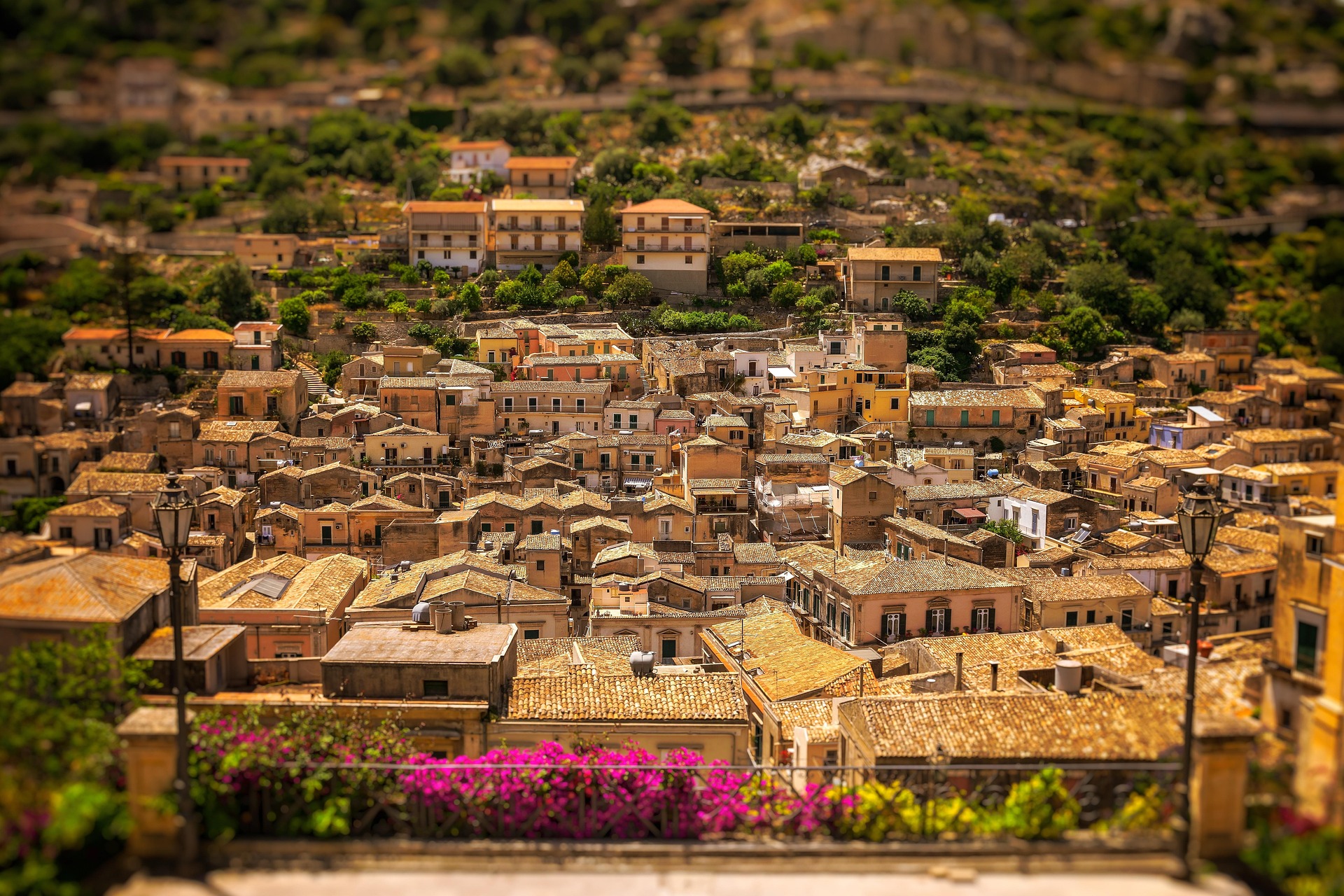
What strikes you about Modica is not just the beauty of individual monuments but the visual coherence of the whole: the local limestone — quarried from the Hyblaean Mountains — colors the city with a warm blond that intensifies with the daylight, reaching its peak at sunset, when the church facades seem to ignite. It is this same stone that you see in the roofs, alleys, and stairways — a unique material that makes Modica a city that seems to have grown from the rock on which it is built, not superimposed on it.
The Val di Noto UNESCO site is considered by experts to be the most important complex of late Baroque architecture in the world. The criterion that convinced the UNESCO Committee is the exceptional coherence between urban planning, architecture, and landscape context: a very rare quality, achievable only because the destruction of 1693 was so total that it allowed for a reconstruction designed from scratch over a vast area.
The Territory — Hyblaean Mountains, Gorges, and Rock Landscape
Modica is not just the city — it is also the surrounding territory, one of the most extraordinary and least known in Sicily. The municipality of Modica covers 291 km², a vast area that includes the Hyblaean countryside, agricultural districts, river valleys, and stretches of coast. It is the fourth-largest municipality in Sicily.
The landscape is that of the Hyblaean Mountains: a limestone plateau fractured by deep valleys carved over millennia by rivers. This geological structure has created the so-called Hyblaean Gorges — natural canyons with sheer rock faces, rich in Mediterranean vegetation, watercourses, and, above all, human traces layered over thousands of years. In the gorges, you can find rock-hewn churches, prehistoric settlements, remains from the Greek and Late Roman periods, abandoned mills, and medieval bridges.
The Cava Ispica — which borders Modica's territory — is one of the most important archaeological sites in the Mediterranean: a canyon of about 13 km with rock settlements ranging from the Bronze Age to the Middle Ages, including "grotticella" tombs, early Christian catacombs, and Byzantine churches. It is a place that very few visitors reach, yet it deserves to be on the same level as Sicily's most famous sites.
The agriculture of the Hyblaean region has also shaped the built landscape: the masserie — farmhouses made of local stone — dot the countryside, many of which have been restored as high-quality agriturismos and accommodations. The terraced olive groves, carob groves, and vineyards surrounding Modica produce quality extra virgin olive oil, carobs used in the food and wine industry, and the wines of the Hyblaean territory — Nero d'Avola, Frappato, Cerasuolo di Vittoria DOCG — among Sicily's most appreciated.
The Duomo di San Giorgio — Modica's Symbol
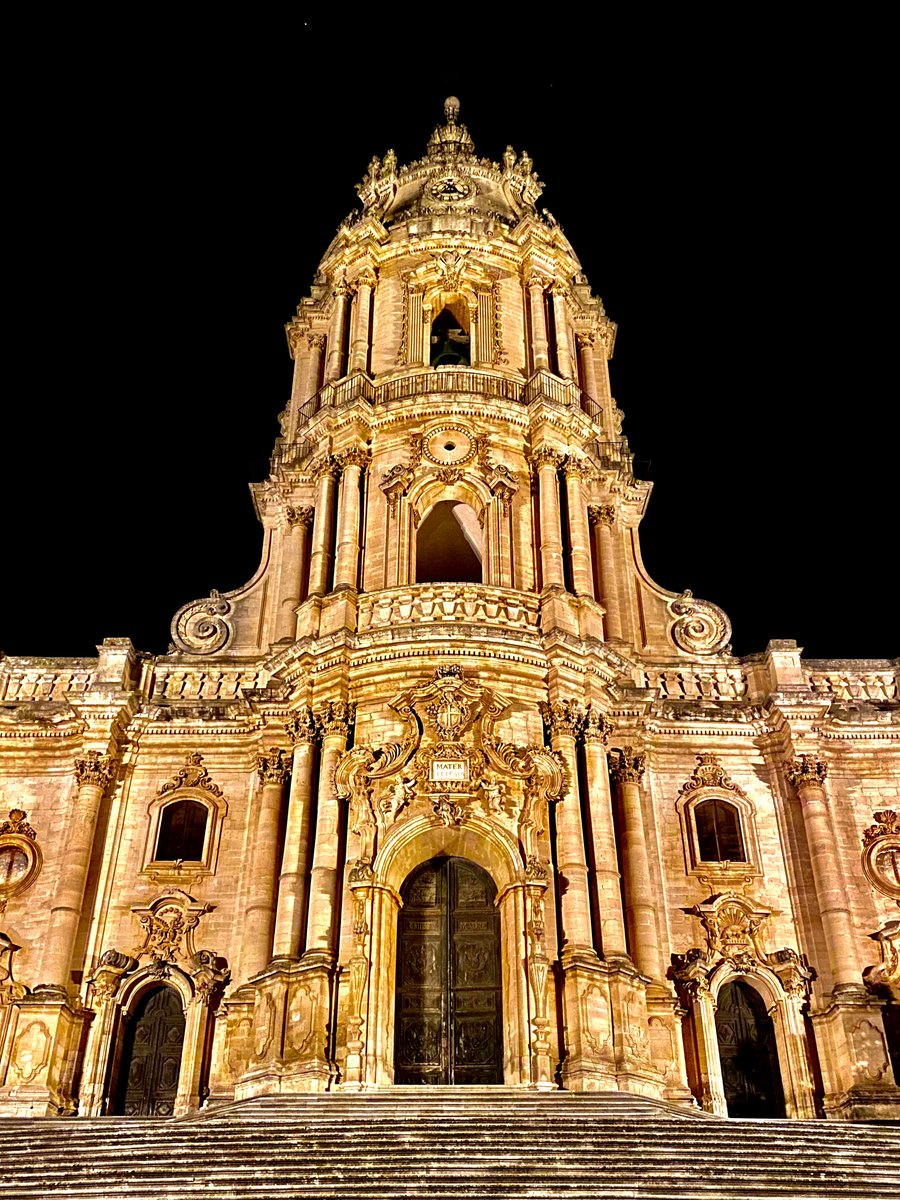
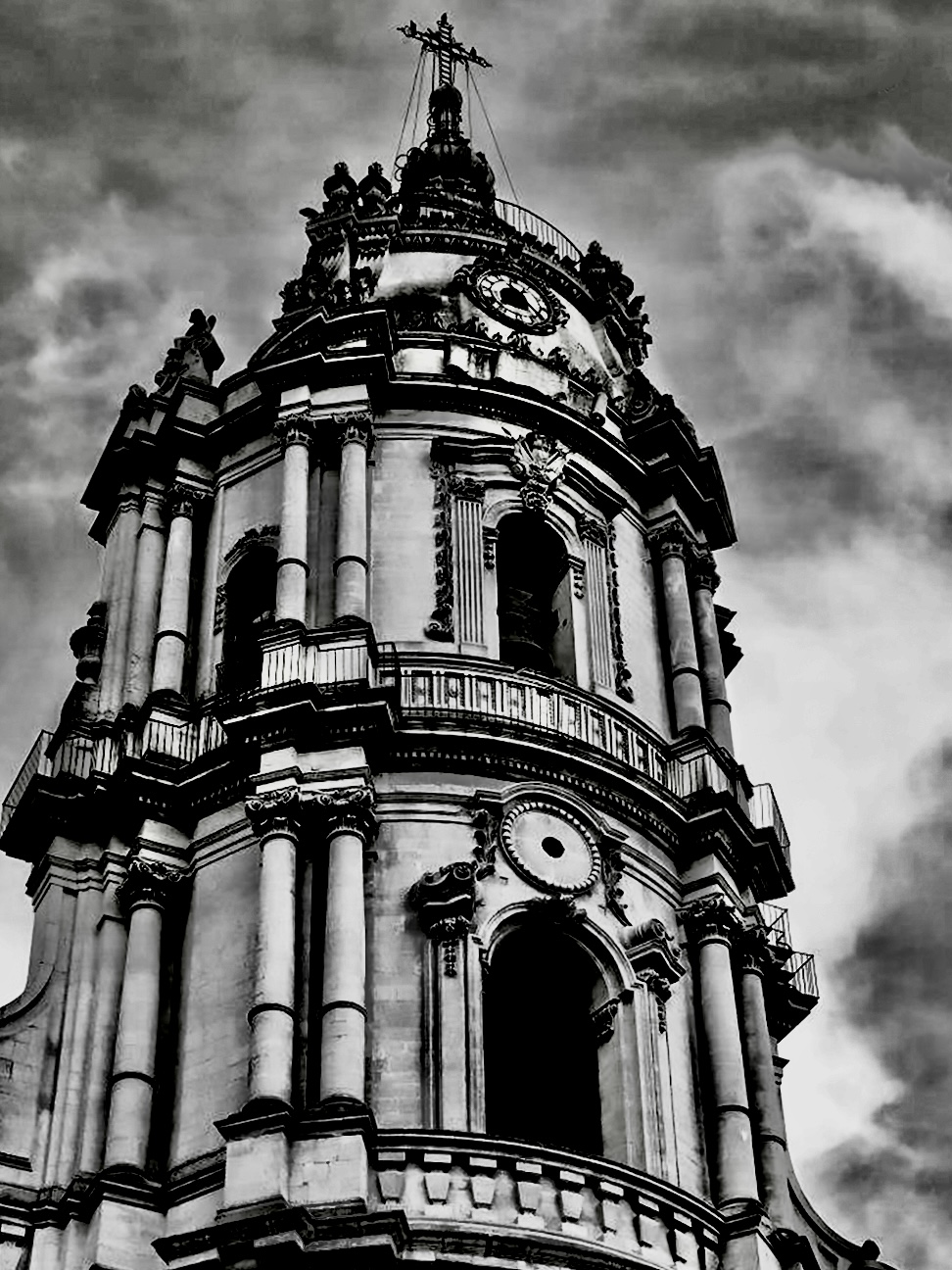
If there's one image that identifies Modica worldwide, it's the Duomo di San Giorgio dominating the lower town from above with its three-tiered facade and towering bell tower. Designed in the unmistakable Sicilian Baroque style and completed in its current form in the 18th century, the Duomo is dedicated to the city's patron saint and is one of the most photographed sacred buildings in all of Sicily.
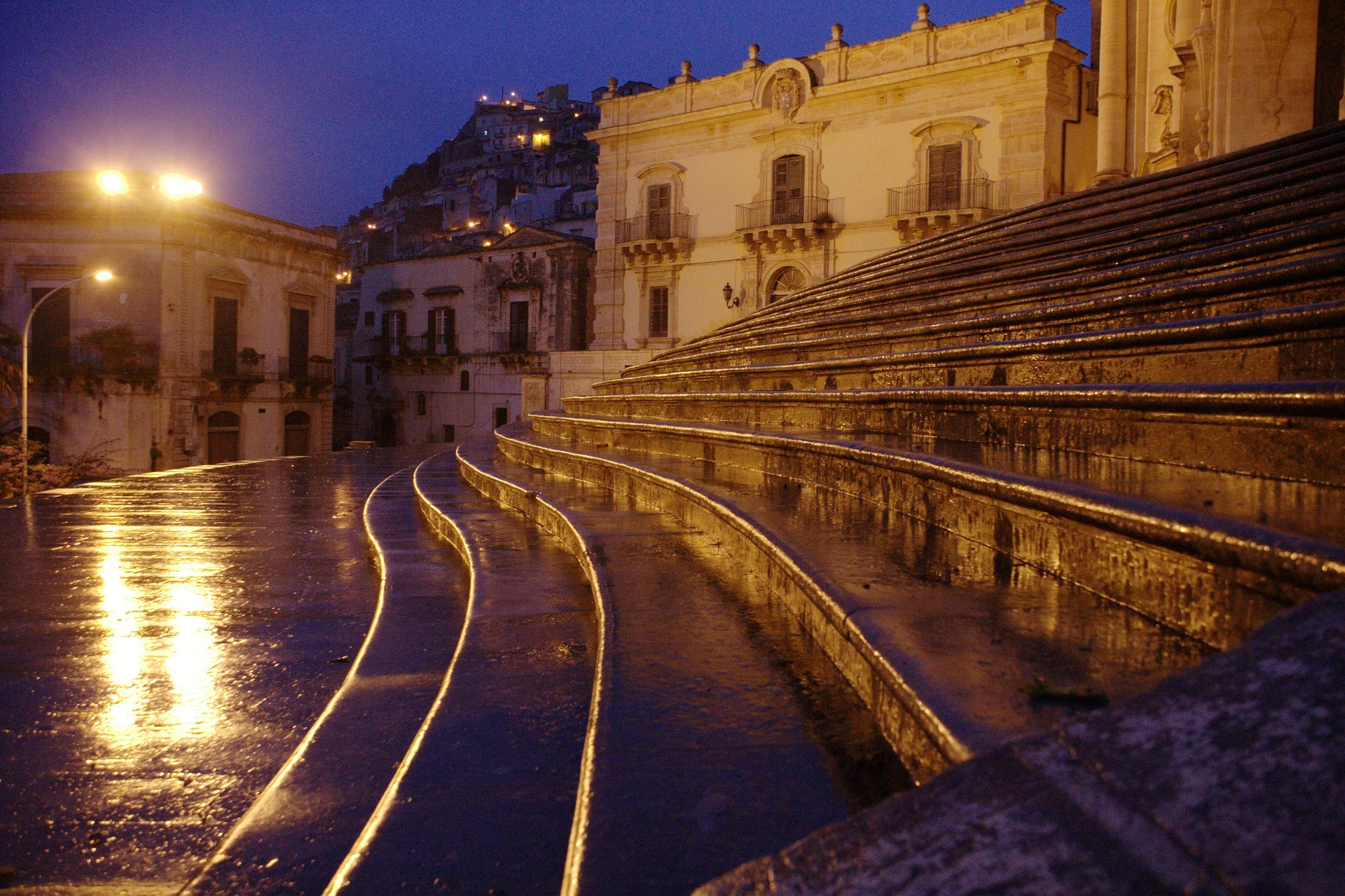
What makes its appearance extraordinary is not just the architecture but its location: the Duomo is reached by climbing a monumental staircase of 250 steps that separates the church's level from the street below. This vertical separation — the church rising from the void of the valley — is unique in Sicilian Baroque architecture. Every perspective changes with the viewing angle: from below, it appears as a cathedral emerging from the rock; from above, it reveals itself as the heart of a complex urban organism. In the evening, in the rain, with the wet stone reflecting the city lights and Modica Alta shining in the background, the Duomo achieves an almost unreal atmosphere.
The facade is a masterpiece of technical execution: three superimposed orders of columns, niches, sculptures, and decorations that never weigh down the structure but make it light and ascending, as if the Baroque were defying gravity. Rosario Gagliardi — the Siracusan architect credited with its design — worked on this facade, considering that it would be viewed primarily from below, at a sharp angle: every element is sized to be perceived correctly from that specific perspective, not in plan.
The interior houses important works of art: the 15th-century polyptych of San Giorgio attributed to the Flemish school, the silver treasures of the Cathedral's Treasury, 19th-century frescoes, and an astronomical clock that indicates the hours by the sun's position — a mechanical rarity built by Modican clockmaker Gioacchino Alecci. Every April 24, the feast day of San Giorgio, the city stops for the procession that carries the silver statue of the patron saint through the streets of the historic center, accompanied by fireworks that light up the sky above the valley.
The County of Modica — 500 Years of History
The Birth of the County (1296)
Modica was not always just an ordinary town. For over five centuries — from 1296 to 1812 — it was the capital of one of the most powerful fiefs in the entire Italian peninsula: the County of Modica. The history of the County began with Manfredi Chiaramonte, to whom the Aragonese king Frederick II of Aragon granted Modica as a fief in 1296. Under the Chiaramonte family, the County expanded to include over 50 municipalities in southeastern Sicily, with a territory stretching from the sea of Pozzallo to the heights of the Hyblaean Mountains.
The Cabreras and Peak Splendor
In 1392, the County passed to the Spanish Cabrera family, and with them, it reached the apex of its power. The Cabreras — counts and later Grandees of Spain — transformed Modica into a small capital: a count's palace, a court, its own administration, a mint, courts of justice, and even a university. The city had a population of over 20,000 inhabitants in the 16th century, comparable to many European capitals of the time. It was the fifth-largest city in the Kingdom of Sicily.
The Spanish rule brought not only political power to Modica but also chocolate: the Cabreras had direct contacts with the court of Madrid, and through this channel, the processing of Aztec cocoa arrived in Modican workshops in the 17th century, giving rise to the tradition that would become PGI Chocolate.
The End of the County
In 1702, the County passed to the Henriquez de Cabrera family, then to the Infante of Spain, until the definitive abolition of fiefs in 1812 with the Bourbon reforms. Five centuries of autonomous history ended with a decree. But Modica had already absorbed that history into its identity: in its noble palaces, churches, chocolate, and dialect. The County no longer exists as an administrative entity, but it continues to exist as a cultural identity — even today, Modicans describe themselves as "children of the County."
The City in Three Quarters: Alta, Bassa, and Sorda
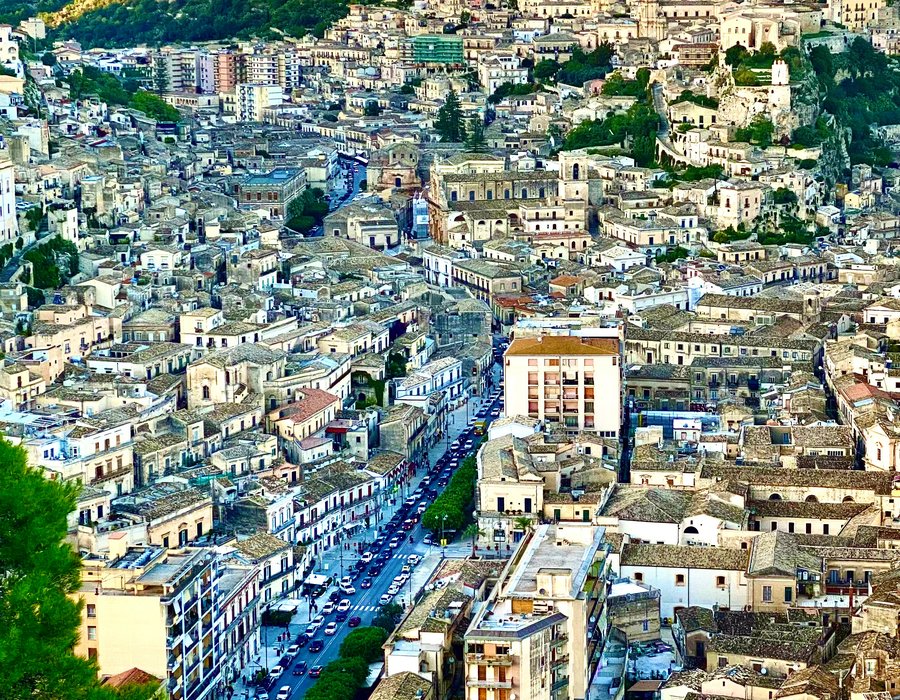
Modica is not a flat city. It's a vertical city, built on three levels of limestone rock separated by deep valleys — and this morphology has, over time, generated three distinct souls, each with its own character, history, and even a good-natured rivalry that Modicans know well.
Modica Alta
This is the oldest quarter, perched on the hill that overlooks the entire surrounding territory. The Castello dei Conti di Modica and the noble districts of the County were located here: the most powerful families lived high up, where the rock offered protection and the view allowed for territorial control. Modica Alta has retained a more austere and quiet identity compared to the lower town — narrow alleys, dark stone houses, sudden glimpses of the panorama. It's the quarter where Salvatore Quasimodo was born, and where a more secluded atmosphere can still be felt today, far from the tourist crowds on the Corso. The churches of San Giovanni Evangelista and Santa Maria di Betlem are among the most significant monuments in the upper area.
Modica Bassa
This is the center of Modica's contemporary life: shops, restaurants, chocolate shops, public life. Its main axis is Corso Umberto I, built in 1902 over the covered bed of the Janni Mauro river — a river that for centuries had represented both the water resource and the greatest danger for the city (the disastrous flood of 1902 finally pushed the authorities to channel and cover it). The Corso is lined with baroque noble palaces, chocolate workshops, and historic cafés. The Duomo di San Pietro — with its stairway of the Apostles — is the religious landmark of the lower town. This is where most of Modica's tourist experience is concentrated: evening strolls, festivals, events, markets.
Modica Sorda
This is the third historic quarter, less known to visitors but deeply rooted in local identity. The name — "sorda," meaning deaf or silent — likely derives from the geographical isolation of this part of the city, separated from the others by a valley that made it less accessible for centuries. Modica Sorda develops along the Provincial Road 27 and in the areas west of the center, with a more modern urban fabric but with important traces of the past. Via Sorda Campailla, which bears its name, is one of the main arteries of the area and also houses one of the city's main parking lots. The quarter hosts churches of considerable historical interest and a more genuinely residential atmosphere, far from the tourist sheen of the central quarters.
The Commercial Hub — The Heart of Shopping
A few kilometers from the historic center, along the SS115, lies the Modica Commercial Hub — one of the largest and most frequented in southeastern Sicily. It's not just a shopping area for Modica: it's a reference point for shoppers from the entire region stretching from Ragusa to Ispica, from Scicli to Pozzallo, with a customer base exceeding 100,000 inhabitants.
The Commercial Hub hosts large-scale retail outlets (GDO), specialized centers for furnishings, electronics, clothing, and building materials, as well as dozens of service shops. It's where Modicans — and residents of neighboring towns — do their weekly grocery shopping, buy durable goods, and go for services that the historic center cannot offer due to its urban characteristics.
For visitors arriving by car from the direction of Ragusa or the A18 highway, the Commercial Hub is often the first impression of Modica — and it also serves as a practical orientation point: here you'll find gas stations, pharmacies, bank branches, and rest stops before descending into the historic center.
Modica PGI Chocolate
Modica is the world capital of artisanal chocolate — not because it produces more chocolate than others, but because it invented a way of processing it that no other place in the world has replicated. The Modican technique, introduced by Spanish rule in the 17th century, is that of the Aztecs: cocoa ground on stone, cold-processed between 35 and 45°C, without conching, without added cocoa butter or milk.
The result is a product radically different from modern chocolate: granular texture, intense and direct flavor, without the creamy and enveloping effect of industrial chocolate. The sugar does not dissolve during processing and remains in visible crystals — that white powder on the surface is not a defect, it's the signature of the authentic product.
On June 5, 2018, with EU Regulation 2018/1529, Modica Chocolate obtained Protected Geographical Indication — the first and only European chocolate with this protection. Every bar produced outside Modica or outside the Consortium's regulations cannot be called Modica Chocolate.
👉 Learn more: Complete Guide to Modica PGI Chocolate
What to See in Modica
Must-See Monuments
Duomo di San Giorgio — the symbol of the city, with its 250-step staircase and three-tiered baroque facade. Open daily, free admission. A visit to the interior takes about 30-45 minutes; exploring the exterior and the staircase is an essential part of any visit to Modica. Arrive at sunset or in the evening for an unforgettable view.
Duomo di San Pietro — in the lower part of the city, with its staircase decorated with the twelve statues of the Apostles. Less celebrated than San Giorgio but equally extraordinary, and usually less crowded. It houses the 16th-century altarpiece of San Pietro and valuable frescoes. The stairs in the rain at night, with Modica Alta illuminated in the background, are among the city's most evocative images.
Castello dei Conti di Modica — the fortress that for centuries was the seat of the County's power. It's not fully visitable, but the panoramic terrace offers one of the best views of the city. From here, the view of the Duomo di San Giorgio and the labyrinth of rooftops in the historic center is incomparable — one of the perspectives that make Modica a city to be discovered vertically as well as horizontally.
Corso Umberto I — the beating heart of the city, built in 1902 over the covered bed of the Janni Mauro river. It's Modica's living room: strolls, cafés, chocolate shops, artisan boutiques, baroque noble palaces illuminated at night. Along the Corso, you'll find Palazzo dei Mercedari, Palazzo Tommasi Alecci, and the Palazzo Municipale. In the evening, with the warm lighting on the stone, it is one of Sicily's most atmospheric places.
Museo del Cioccolato (Chocolate Museum) — housed in the Palazzo della Cultura, it reconstructs the history of cocoa from the Aztecs to the PGI with original 18th-century tools and a reconstruction of a 17th-century workshop. Ideal for understanding the product before buying it. Open all year round.
Casa Natale di Salvatore Quasimodo — the Nobel laureate poet (1959) was born in Modica in 1901. The house-museum in the Modica Alta quarter is a literary pilgrimage site with documents, photographs, and first editions of his works. His father was a station master: the house is located at the Modica Alta train station, a detail that appears in the poet's verses.
Chiesa di San Giovanni Evangelista — in the upper quarter, less known but with a highly refined baroque facade and an interior that preserves important 17th-century Sicilian paintings. Often open only in the morning — it's exactly the kind of place that rewards early risers.
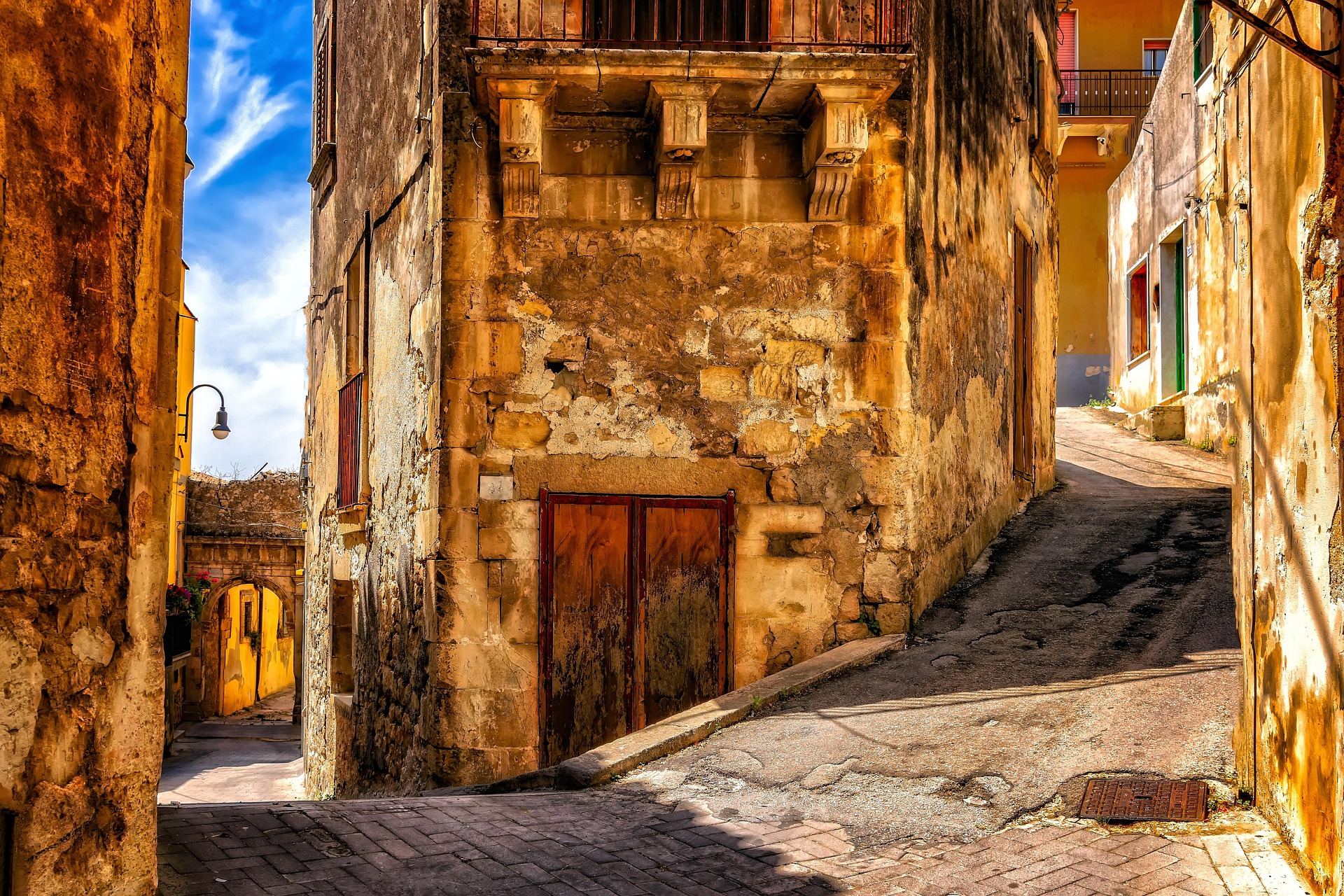
The alleys of Modica Alta — a labyrinth of limestone lanes, carved portals, hanging gardens, flowery balconies, and sudden views of the valley. Walking aimlessly in this part of the city is one of the most authentic experiences Modica offers. Few tourists venture beyond the Corso: those who do find the real city.
👉 Complete Guide to What to See in Modica →
Must-See Surroundings
Modica is the ideal center for exploring the Val di Noto. Ragusa Ibla is only 15 km away — the ancient quarter of Ragusa is a UNESCO World Heritage site and deserves at least half a day: stairways, baroque churches, and panoramic terraces overlooking the Hyblaean countryside. Scicli is 20 km away, much less crowded than the classic tourist circuits and often preferred by more discerning travelers — the location of Montalbano's police station, Palazzo Beneventano, the church of San Matteo on top of the rock. Noto — considered the "capital" of Sicilian Baroque — is 45 km away, with its main Corso perhaps being the most beautiful baroque promenade in the world. Syracuse with its historic center on the island of Ortigia is 80 km away. Ispica, 15 km away, is home to Cava Ispica with its early Christian catacombs.
Modican Cuisine
Modica is famous not only for its chocolate. Modican cuisine is one of the richest and most distinctive in Sicily — a blend of Arab, Spanish, and peasant traditions that has produced unique dishes, often unknown outside the Hyblaean territory.
Traditional Dishes
Scacce are the quintessential Modican stuffed bread: a layer of dough folded over itself with fillings ranging from sausage and potatoes to tomato and onion, or cauliflower and olives. Every bakery and every family has its own recipe. They are the most authentic street food of Modica, found fresh in the morning at the town's bakeries.
The 'mpanata di agnello (lamb pie) is the festive dish — a pastry casing filled with lamb pieces on the bone, seasoned with oil, salt, parsley, and pepper. It was the dish of Easter and special occasions. Today, it can be found in traditional trattorias that still maintain regional cuisine.
'Mpanatigghi are one of the most peculiar sweets in all of Sicily: sweet fried ravioli filled with ground beef, chocolate, almonds, cinnamon, and cloves. The combination sounds impossible — meat and chocolate in a dessert — yet it has been documented since the 17th century and reflects the Arab influence on local cuisine, where sweet-savory mixtures were common. The 'Mpanatigghi Consortium now protects the original recipe.
Horse meat is an institution in Modica: specialized butcher shops, "vastedde" (bread rolls) with spleen, steaks. It is a deeply rooted tradition in Hyblaean food culture, a legacy of an agricultural economy where the horse was a working animal and its meat a precious resource. The horse butcher shops in the historic center are recognizable by the rampant horse emblem.
Ragusano DOP — the province's cheese — is produced on the Hyblaean plateau with milk from Modicana cows, an autocthonous breed now protected. The parallelepiped wheels hanging in aging cellars are one of the most characteristic images of the territory. Eaten fresh at the table or grated over pasta when aged.
Wines of the Territory
Southeastern Sicily produces some of the most interesting wines in Italy. Nero d'Avola is the flagship grape variety: full-bodied, soft tannins, aroma of red fruits and spices. Frappato — a native Hyblaean grape — produces light and floral wines, often blended with Nero d'Avola in Cerasuolo di Vittoria DOCG, the only DOCG in Sicily, produced a few kilometers from Modica. Vittoria, Acate, and Comiso are the main centers of wine production in the area.
Modica in Cinema and Literature
Commissario Montalbano
For millions of Italian and foreign TV viewers, Modica and its territory are the emotional landscape of Commissario Montalbano — the television series based on Andrea Camilleri's novels that for twenty years brought Hyblaean Sicily to screens worldwide. Many of the series' most famous scenes were filmed in Modica: Corso Umberto I, the stairs of the Duomo di San Pietro, the alleys of Modica Alta. The police station in Montalbano's series is in Scicli, 20 km away; the restaurant "Da Enzo," where Montalbano dines — in the narrative fiction — is inspired by real local establishments.
The Montalbano effect on tourism in the Hyblaean region has been extraordinary: it has brought visitors from all over Europe — particularly from Germany, Great Britain, and Northern European countries — who come with Camilleri's books in their pockets searching for the locations from the series. A literary and cinematic tourism that has made Modica known in markets that would not have been reached by traditional tourism marketing alone.
Salvatore Quasimodo — the Modican Nobel Laureate
Modica is the birthplace of Salvatore Quasimodo (1901-1968), one of the greatest Italian poets of the 20th century and a Nobel laureate in Literature in 1959. Quasimodo rarely spoke of Modica in his adult poetry — he left Sicily young to work as a surveyor in the North, then as a poet in Milan — but the Hyblaean city is present in his formation, in the inner landscape that emerges in his most intense poems. His early poetry — that of Acqua e terre (1930) — is imbued with the southern landscape, Sicilian light, and a sense of ancient time that comes from that upbringing.
His birthplace in Modica Alta — where his father was a station master — is now a museum and a point of reference for visitors interested in 20th-century Italian literature. Every year, in August, Modica hosts the International Literary Prize "Salvatore Quasimodo."
Sicily in World Literature
The Hyblaean territory has also inspired other writers. Gesualdo Bufalino — born in Comiso, a few kilometers from Modica — described in Diceria dell'untore and other novels a moral and physical landscape that is that of the Hyblaean Mountains: sun-drenched, calcareous, introverted, capable of sudden beauty. Vincenzo Consolo, also Sicilian, traversed these territories in his narrative. The Hyblaean landscape is one of the most literarily inhabited in Sicily.
Traditions, Festivals, and Religious Life
Modica is a deeply Catholic city, and its religious festivals are not just folkloric events for tourists — they are collective rituals that involve the entire community, with deep historical roots and authentic emotional participation.
Feast of San Giorgio — April 24
Modica's patron saint is San Giorgio, and his feast day on April 24 is the most identity-defining moment of the year for the city. The procession begins from the Duomo di San Giorgio with the silver statue of the patron saint carried on the shoulders of the faithful through the streets of the historic center, accompanied by the band, civil and religious authorities, and thousands of Modicans following on foot. Fireworks explode over the valley in a spectacular finale. It is one of the most beautiful and least-touristy events in the Val di Noto.
Feast of Madonna delle Grazie — Third Sunday in May
One of Modica's oldest and most heartfelt devotions, linked to a miracle from 1615 recorded in the church's archival documents. The most extraordinary feature of this festival is the barefoot pilgrimage: devotees walk barefoot from the hamlet of Scausi to the church of Madonna delle Grazie in the city — several kilometers over asphalt and stones, in an act of faith that for many Modicans is a commitment kept for years, sometimes for life. The procession passes through Via Mercè, Corso Umberto I, Via Vittorio Veneto, and Viale Medaglie d'Oro. Fireworks and three ritual laps on the parvis conclude the festival.
Feast of San Pietro — June 29
Modica's second patron saint is San Pietro, and his feast day on June 29 is the occasion for an equally heartfelt procession that starts from the Duomo of the same name in the lower town. It is traditionally the festival of the working-class neighborhoods, with a more informal and convivial atmosphere compared to the solemnity of San Giorgio.
Christmas and the Nativity Scene Tradition
Modica has a well-developed tradition of nativity scenes, with artisanal presepi (nativity scenes) in churches and alleys of the historic center during the Christmas season. The week between Christmas and Epiphany is one of the most atmospheric times to visit the city: few tourists, traditional markets, warm lights on the baroque stone.
When to Visit Modica
Modica is beautiful all year round, but each season has its own characteristics. March and April are ideal for those who love tranquility: pleasant temperatures (15-20°C), very few tourists, the Hyblaean countryside in bloom with almond trees, green wheat, and red poppies. Holy Week in Modica is an intense and authentic experience. May is perhaps the best month overall: perfect climate (20-25°C), long days, the festival of Madonna delle Grazie, and the sea becoming swimmable.
June opens the bathing season at Marina di Modica, just 12 km away. The historic center is particularly lively in the evenings. July and August are the most crowded and hottest months (30-35°C) — visitors in August should expect heat and crowds, but the evening atmosphere is unique, and many local festivals animate the province. September and October are perhaps the best months overall: mild climate (22-28°C), sea still warm until mid-October, tourist numbers dropping sharply, lower prices for flights and accommodation. ChocoModica 2026 takes place from October 30 to November 1.
November and December offer a quiet and authentic atmosphere: nativity scenes in churches, Christmas markets on the Corso, and the opportunity to experience Modica as the Modicans do, without queues and without the feeling of being guests in a city that belongs to tourists.
Frequently Asked Questions About Modica
How far is Modica from Catania?
Approximately 90 km, reachable in 1h 10min via A18 and SS194. Catania Fontanarossa Airport is the main gateway for international flights. Comiso Airport (CIY) is closer — 18 km, about 20 minutes — but with fewer flights available.
Is Modica safe for tourists?
Yes, Modica is one of the quietest cities in Sicily. Crime is very low, the historic center is busy at all hours, and the welcome towards tourists is genuinely cordial. As in any tourist city, it's good practice to be mindful of your belongings in crowded areas during events.
Is Modica expensive compared to other Sicilian destinations?
No. Modica is generally more affordable than Taormina, Cefalù, and more well-known coastal areas. Restaurants in the center offer excellent local cuisine at reasonable prices. Accommodations, even quality ones in the historic center, have competitive rates. Only during ChocoModica and in August do prices rise significantly.
Is it better Modica or Ragusa?
It's not a competition — they are two different and complementary experiences. Modica is more vertical, more labyrinthine, with an independent history (the County) that gives it a strong identity. Ragusa Ibla is more manicured and compact, with a baroque center that is perhaps more "photogenic" but also more touristed. Many visitors visit both in the same day, as they are only 15 km apart. Complete Comparison Modica vs Ragusa →
Can Modica be visited without a car?
The historic center can be visited entirely on foot, and many of the main monuments are concentrated within an 800m radius. To get to Modica without a car, there is the train (Modica station on the Syracuse-Ragusa-Canicattì line) or the Interbus bus from Catania and Syracuse. For travel to the coast and surrounding areas, a car remains very convenient.
How many days are needed to visit Modica?
One day is the minimum for the historic center. Two days allow you to see Modica at a relaxed pace and take a trip to the surroundings (Ragusa Ibla, Scicli, or the coast). Three days are ideal for those who want to explore the Hyblaean territory as well, Cava Ispica, and take an excursion to Noto or Syracuse. One-Day Modica Itinerary →
News from Modica
The historic center is partially restricted to traffic. The main parking areas are on Via Resistenza Partigiana, Via Sorda Campailla, and in peripheral areas with free shuttles during events. Complete Parking Guide →
Modica offers a rich selection of B&Bs, agriturismos, and hotels in the historic center and surrounding areas. Booking in advance is recommended during high season and events. All accommodation options →
Modican cuisine is among the richest in Sicily: pasta with sardines, lamb pie, scacce, caponata, and of course, chocolate. Corso Umberto I and the alleys of the center are full of quality trattorias and restaurants. The best restaurants →
Ask ModicaAI
Have questions about Modica? Itineraries, restaurants, parking, events, weather, pharmacies — ModicaAI's AI answers 24/7, for free, with no registration required.
Open ModicaAI →